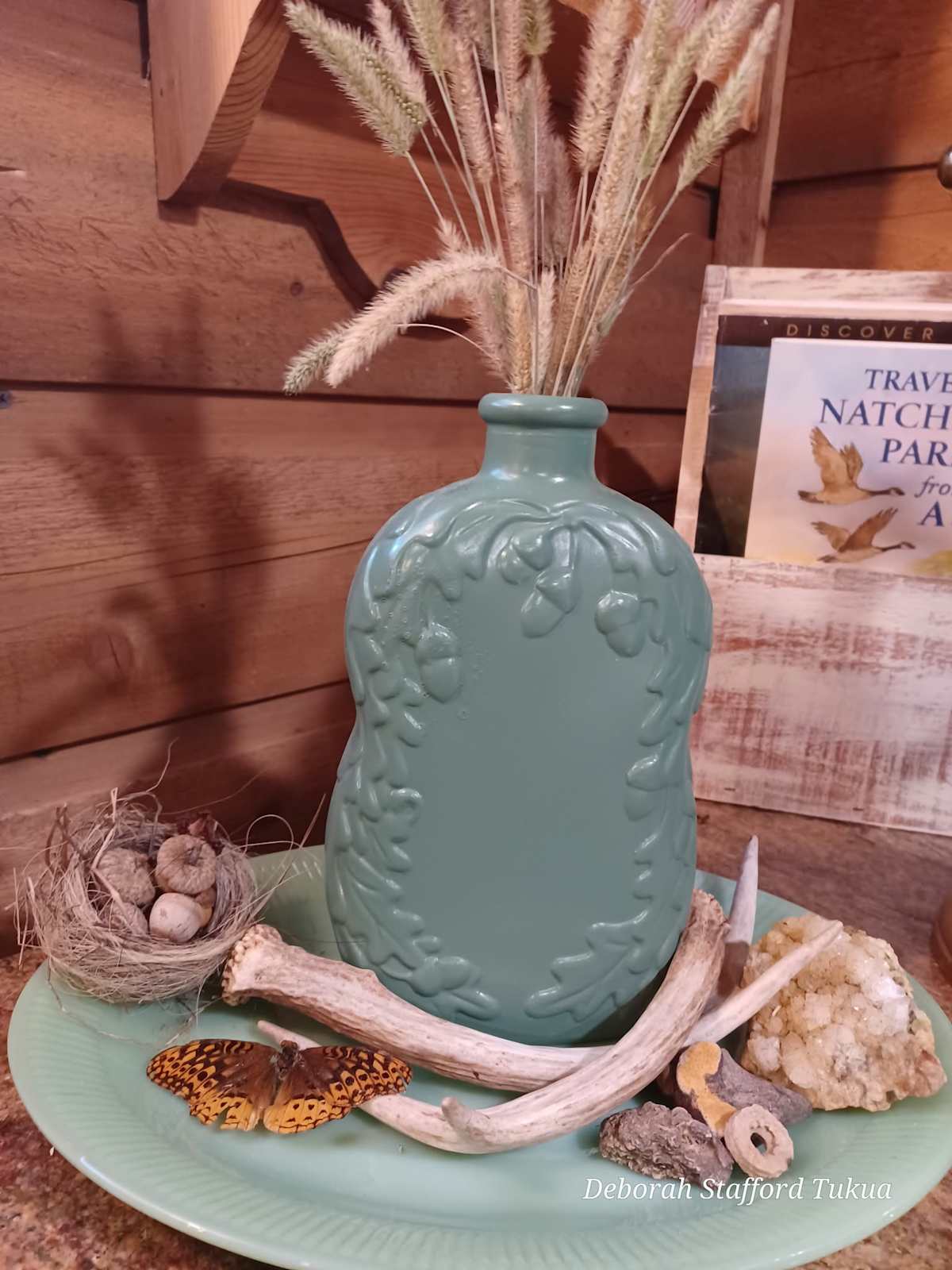
Nature’s treasures are all around us in the fields, streams, and woodlands. I gather interesting things I find outdoors—a cool rock or two here, antlers there, a bird nest under a stand of trees. A surprise gift of a vintage, jadeite platter from our daughter-in-law motivated me to create an attractive display using found treasures.
The lovely jadeite platter on my desk features things I found on our property, over time. Of course, you don’t have to hunt a jadeite platter for this project. Wooden trays or plates add to the organic feel. I’ll be making more nature trays with the grandkids later this week with polished wooden pieces I bought from a Ross store. Your nature display can feature items collected during a vacation or day trip to the seashore, creek, along a river, a walk around a pond, poultry farm, or woodlands. When buying stuffed scallops at the grocery store, save those pretty shells too. Our grandkids love collecting them.
Natural Items to Display
Reindeer moss, rocks, seashells, and freshwater shells too, feathers, grasses, a cotton boll, moths and butterflies, deer antlers, bones, acorns, even a bird nest the wind blew to the ground.
What’s on my Tray of Nature Treasures
First, choose a vase. I used a green vase with an acorns and leaves motif in the center of the platter to add height. The vase displays a cluster of native grasses with small seed heads I found growing wild. I think it’s Timothy grass, but I’m not certain. Before bringing them indoors, I ran my fingers through the tops to remove any loose seeds. Then I sprayed the seedhead on each stem with hairspray to help keep them intact.
Vintage glass spice jars and unique bottles are ideal for displaying a small assortment of feathers if you want to use something other than a vase. Add a cork to the top of the glass jar or bottle and poke the feathers through to keep them upright.
In front of the vase, I arranged a pair of deer antlers I found in our field. On the right side, I placed a sparkling crystal geode rock, a crinoid fossil, and other interesting rocks from the creek bed. On the left side of the platter, I added a bird’s nest, filled with acorns. And a lovely orange and black butterfly, a Variegated Fritillary (Euptoieta Claudia). In case you’re wondering, I enjoy watching butterflies and moths too much to catch and kill one. I rescued the remains of this dead butterfly from ants.
Thoughts on Collecting and Cleaning
When collecting fresh water or saltwater shells, leave any that are inhabited by animals. Only collect empty shells.
Collected feathers can be placed in a Ziplock bag and put into the freezer for 3 days, then removed and washed with dish soap and water before handling. This process should kill mites and disinfect the feathers.
Ornamental and native grasses, reindeer moss, a tiny bird nest, an empty wasp nest, and pieces of tree bark or pine cones are beautiful, but they may contain mites or other bugs. The easiest solution is to arrange them on a plate under a clear, glass cloche. Or, place small organic items in a Ziplock bag in the freezer for 3 days.
How-to videos on cleaning shells, bones, feathers, and other organic items are readily available online. Each one requires a different process, so I’ll refer you to search online.
Our grandchildren are eager to make their own treasure tray of nature’s wonders. I’ll share pictures of their masterpieces soon. In the meantime, take a stroll, and start gathering items to display.
By Deborah S. Tukua, author, and freelance writer
Stay in touch, join us at www.deborahstukua.com