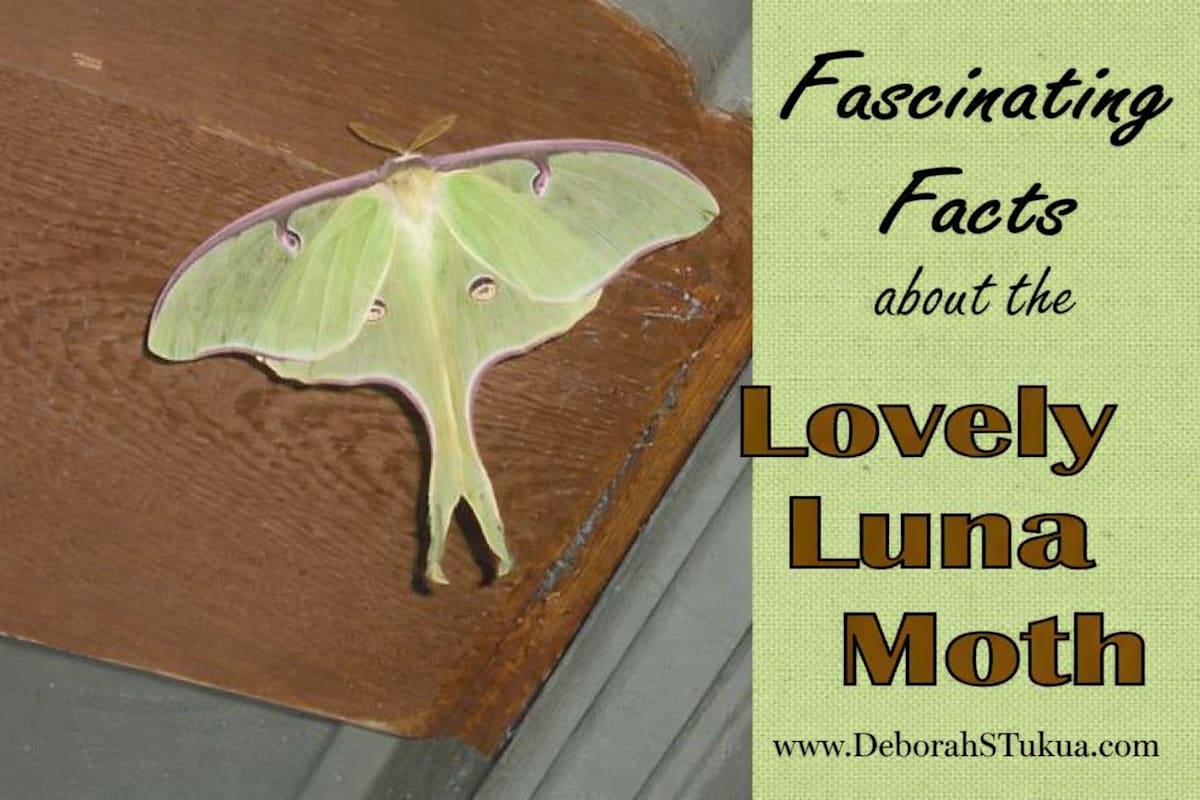
Luna, the beautiful, large moth is soft, light green in color with intriguing round spots on its wings that resemble eyes or moons to scare predators away. Luna means moon. This moth is aptly named as it flies beneath the moon at night. Their long, tapered tails twist slightly at the ends.
It is a rare and spectacular occurrence to see a live Luna moth. I typically see one each summer. I saw one yesterday in our rock garden. Here’s a nature journal entry I wrote fifteen plus years ago about my first and unforgettable summer encounter with a lovely Luna.
Lying on a raft in our creek, on a warm afternoon, I spotted something green floating on the surface of the clear water toward me. It was a luna moth. I scooped it up just before it reached the bend in the creek to rushing waters. The luna moth was alive so I took it back to my raft for a closer look. They are an exquisite creature, a unique and lovely work of God’s creation.
Luna rode back to the house with me in the pick-up truck and rested motionless on a rock in the kitchen while I prepared supper. Around 6:30 pm, Luna began lightly fluttering her wings for the first time. She joined us on the table of our front porch while we ate dinner. A lovely, live centerpiece. She stayed there after the table was cleared and even later when we sat on the porch swing, as dusk settled in.
Eager to learn about our guest, I went inside to my computer to research the luna moth. When I went back out on the porch and turned on the light-Luna had gone. Somewhere in the darkness of the night, Luna was flying, and my special encounter with lovely Luna was never forgotten.
10 Fascinating Facts About the Lovely Luna Moth
1. The luna moth is found in every state within the eastern United States, and in Texas and Canada.
2. They only live one week.
3. Luna moths have no mouth and do not eat.
4. Luna moths do not fly during the day. They only fly at night.
5. Host trees for the luna moth are sweetgum, persimmon, walnut, hickory, willow, sumac, birch, and other deciduous trees in forested areas.
6. After mating, the moths lay their eggs, up to 200 on the underside of tree leaves. The eggs are white and coated with a natural brown adhesive. The emerging caterpillar eats the leaves of its host tree. Once this 5-week stage of development is complete, the cocoon is spun onto tree leaves, where it stays throughout winter and spring. The adult moth emerges from its pupa case, and cocoon, and the lifecycle continues.
7. Luna moths are highly attracted to light. In fact, they can be so distracted by bright outdoor lighting that they do not mate, which is necessary to produce eggs, and continue a productive lifecycle.
8. Female luna moths attract males by releasing pheromones, a scent that males detect and are drawn to like fragrant perfume.
9. Known predators of the luna moth are owls and bats, both night flyers, and hunters.
10. The luna moth can fly without it tails. However, the twist at the ends of its elongated tail serves as a means of protection. The twists produce an echo which may confuse its predators flying in the dark, making it difficult to catch.
Help the Luna Moth Thrive
You can help the luna moth species to thrive by planting host trees, (See #5, list of host trees), avoid using chemical pesticides, and excessive yard lighting.
By Deborah S. Tukua, author
www.DeborahSTukua.com