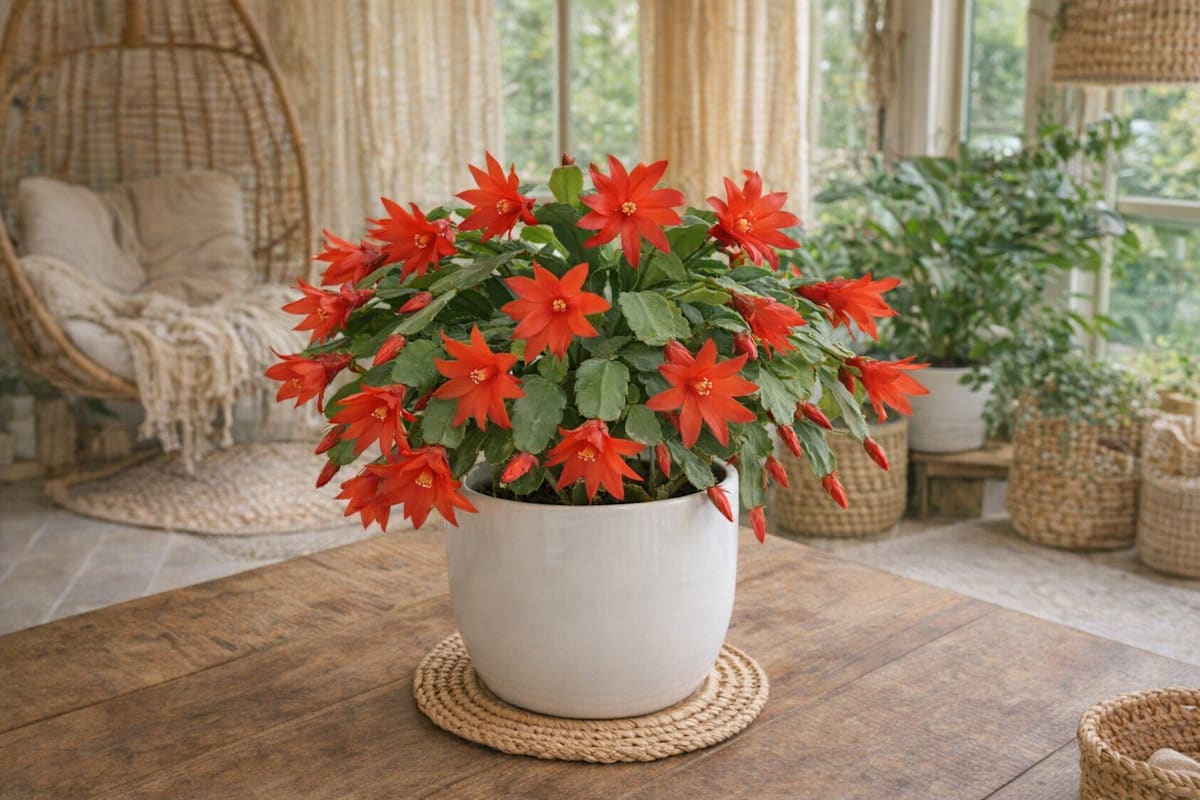
Easter Cactus is a vibrant, springtime star, with lovely star-shaped flowers. The Easter Cactus also known as Spring Cactus blooms from March until May. Its flowers open at sunrise and close at sunset. Even though the Easter Cactus isn’t as popular as the holiday favorite, Easter Lily, it’s a beauty, and easy to grow indoors with adequate light. Available in an array of brilliant orange, violet, fuchsia, white, or red blooming varieties, the potted Easter Cactus adds early bursts of spring color to your home.
Easter Cactus, Thanksgiving Cactus, or Christmas Cactus? What’s the difference? You guessed it. Each cactus is named for the time it typically blooms. A quick way to tell the difference between plants is by looking at its leaves.
- The Easter Cactus (Rhipsalidopsis gaertneri) has flat, jointed leaf segments with soft, brown bristles between each segment, and at the tips.
- The Thanksgiving Cactus (Schlumbergera truncata) is often called the “Crab Claw Cactus” because of its leaf shape. Each leaf segment has pointed edges.
- The Christmas Cactus (Schlumbergera xbuckleyi) has scalloped, round leaf edges.
Native Habitat
Easter cactus is a type of succulent, part of the Cacti family. Unlike cacti native to an arid desert climate, Easter cacti are native to the tropical rain forests of Brazil. In their natural environment, they grow in the crotches of tree branches and rocks. Like orchids, they do not damage or take anything from the host tree, so they are not parasitic.
Basic Houseplant Care
Understanding how Easter Cactus grow in their native environment helps us better care for them as potted plants. The roots thrive when they can breathe. As houseplants, plant in a loose medium where water and oxygen can easily reach the roots yet drain well. They need more frequent watering than desert cacti but do well in partial sunlight and dry conditions. Don’t place in a hot window or in direct sunlight.
Water well and allow the water to drain out of the pot afterwards. The soil should be dry before you water the plant again. This helps prevent the roots from rotting. During spring blooming, the plant may need more water than it does the remainder of the year. Place a saucer under the pot. Add a layer of pebbles to the saucer to provide humidity and prevent stems and roots from rotting in excess water.
Don’t Toss It After Spring Blooming
If you purchase an Easter cactus this spring, it is most likely flowering. The Spring cactus should thrive long past its first blooming season. In fact, it is common for the potted plant to grow ten years or more. The plant usually has no problem with insect infestation. They are considered nontoxic to dogs and cats too. For these reasons and more, the Easter cactus is easy to care for, making it an ideal year-round houseplant.
Repotting Tips
If the Easter cactus is in a plastic container, consider repotting it. If you choose to repot the plant, wait a month or two after spring blooming has stopped. Clay pots are ideal for growing Easter cactus. Clay permits good soil aeration and drying after watering. Use a potting mix suitable for growing succulents or cacti. One that drains well. Light peat mixes allow proper drainage. You can also add perlite or bark pieces to the potting mix if it seems too heavy. Easter cactus grows well snug in its pot, so you won’t need to repot it again for a few years.
Fertilizing
Wait until the plant stops blooming to fertilize your Easter cactus. Premature fertilizing, while the plant has buds or flowers, may cause the blooms to fall off. Use a basic soluble houseplant fertilizer monthly from late spring through the summer. Each spring, you may also add organic compost to the pot, if desired.
Pruning
Pinch dead flower blooms off as they appear. Pruning isn’t a must unless you want to control the overall size of the plant. Once the plant has reached maximum desired size, trim the outer leaflets of the entire plant to maintain its shape and size.
How to Get Easter Cactus to Bloom
Easter cactus need equal amounts of dark and light for eight weeks prior to its spring blooming season. Nights need cooler and drier conditions, ideally around 50˚ F. Don’t place the potted plant near a direct heat source. The warmer your house, the sooner the blooming period begins. Like a Christmas cactus, they may even bloom twice a year.
By Deborah S. Tukua, author of Traveling the Natchez Trace Parkway from A to Z, eight nonfiction books, a contributor to Chicken Soup for the Soup books, and a writer for the Farmers’ Almanac since 2003.
Join our list at www.deborahstukua.com and receive a challenging hidden word search about the Natchez Trace.