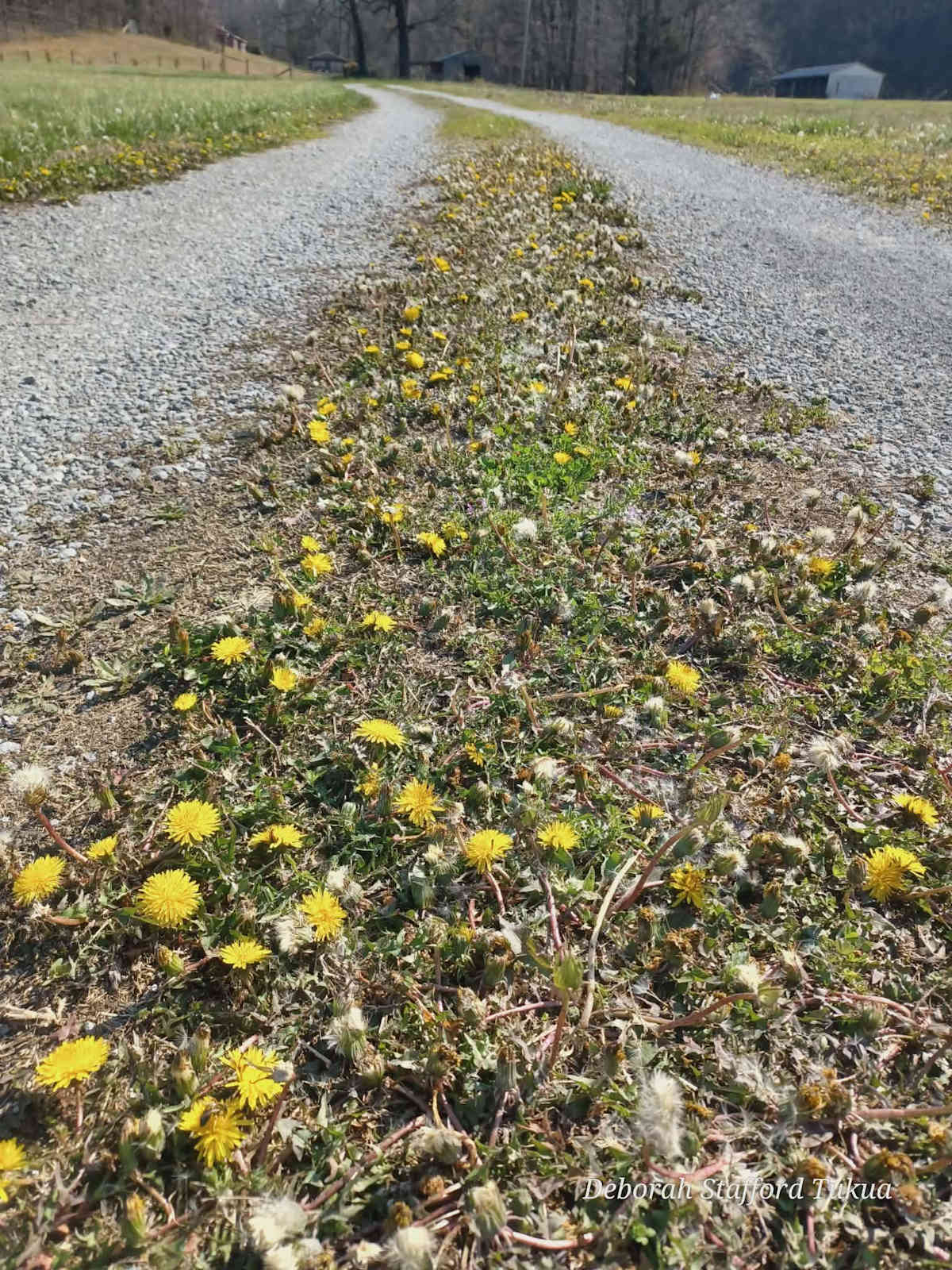
Your lawn and garden can be beautiful and beneficial, providing sources of nectar and pollen for bees and other pollinators. Beauty is in the eye of the bee-holder. Living in the countryside, our idea of a perfect, beautiful lawn is one that supports and nourishes the plants, animals, and people. We enjoy living in a healthy environment and admiring the wildflowers that appear in the meadow.
Bees are buzzing around the abundant show of wildflowers in our landscape this spring. Dandelions, clover, henbit, chickweed, wild violets, my favorite, and water-mint along the creek's edge. The center of our gravel driveway is a buffet of dandelions for the bees and butterflies, among the first wildflowers that appear in spring. In the woods along the creek, native perennials: trillium, bloodroot and mayapples are popping up through the leaf litter.
Instead of reaching for weed killer, we leave the thriving wildflowers to provide food for the bees and their young. Bees collect nectar and pollen from plants to feed their colonies, which are vital during this time of hive formation and brood production. We also delayed mowing. And when we mow grass, we leave patches of wildflowers for the pollinators.
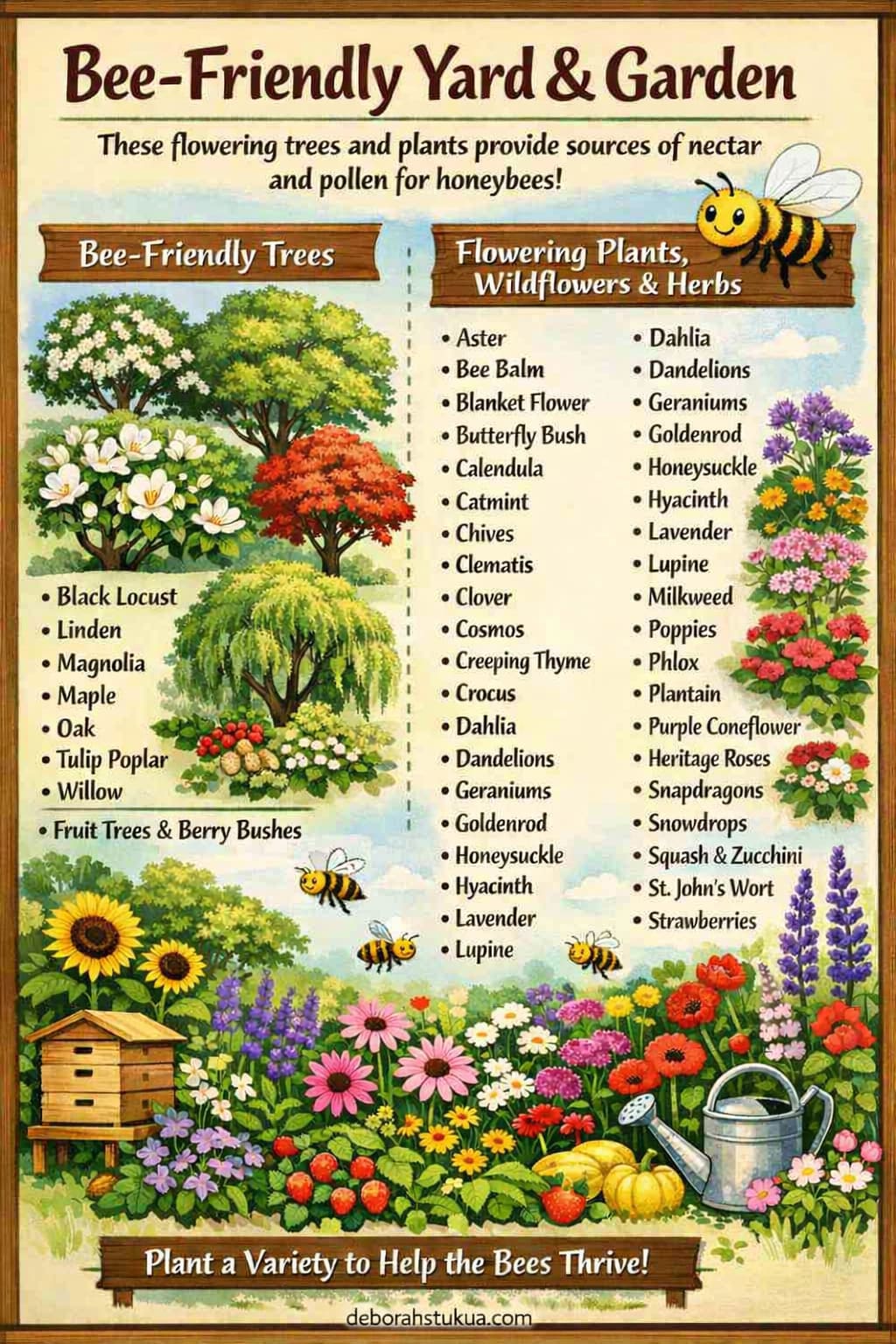
Here's a list of plants bees love, to help you craft a bee-friendly yard.
These flowering trees and plants provide sources of nectar and pollen for honeybees.
Trees - black locust, linden, magnolia, maple, oak, tulip poplar, and willow.
Fruit trees and berry bushes too.
Flowering Plants, Wildflowers & Herbs - aster, bee balm, blanket flower, butterfly bush, calendula, catmint, chives, clematis, clover, cosmos, creeping thyme, crocus, dahlia, dandelions, geraniums, goldenrod, honeysuckle, hyacinth, lavender, lupine, milkweed, poppies, phlox, plantain, purple coneflower, heritage roses, snapdragons, snowdrops, sunflowers, squash, St. John’s wort, strawberries, sunflowers, and flowering vegetables, like zucchini.
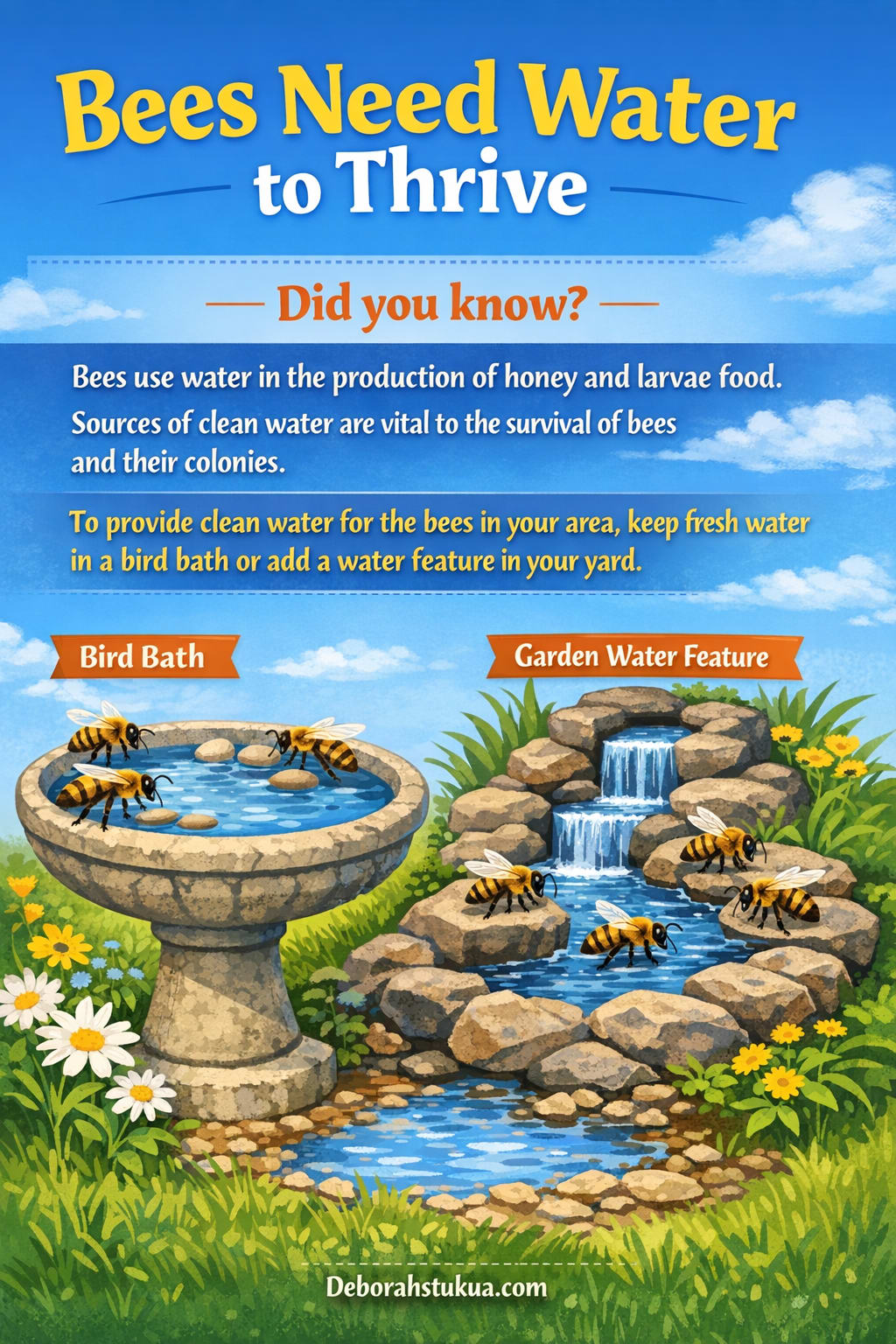
Bees Need Water to Thrive
Did you know? Bees use water in the production of honey and larvae food. Sources of clean water are vital to the survival of bees and their colonies. To provide clean water for the bees in your area, keep fresh water in a bird bath or add a water feature in your yard.
By Deborah S. Tukua, author of Traveling the Natchez Trace Parkway from A to Z
Join our list to stay current. For signing up, you'll receive a challenging, hidden word search. www.deborahstukua.com